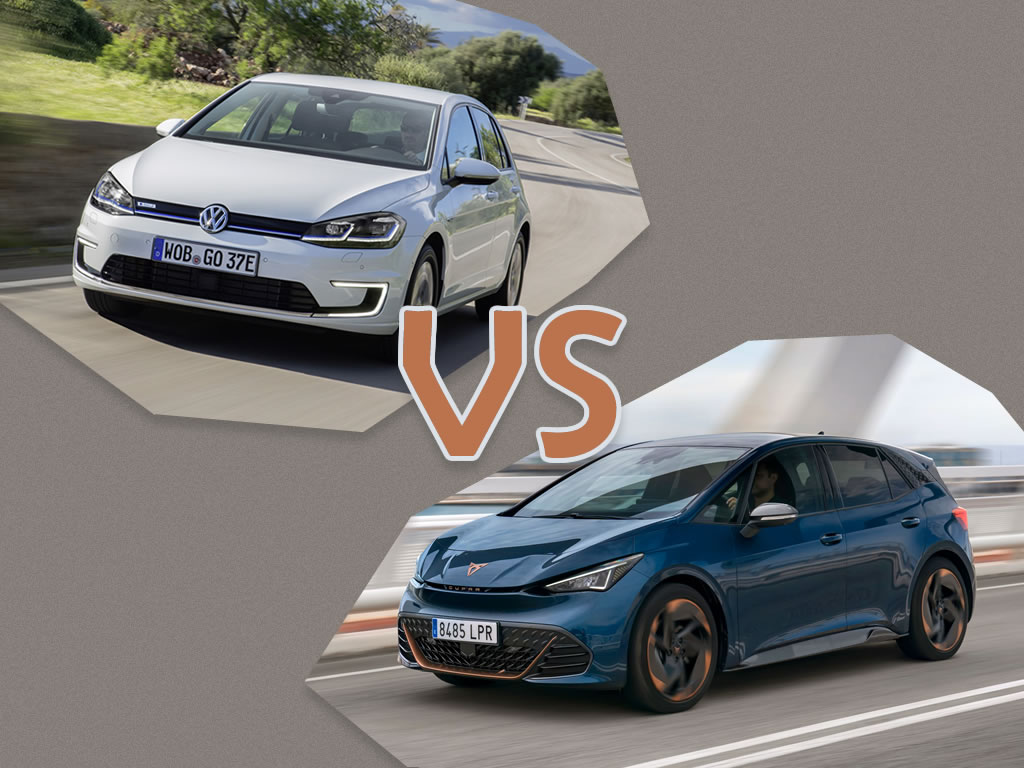
It’s been nearly a year since I purchased a CUPRA Born as the second EV in my two-car household. In this note, I compare different aspects of the e-Golf and the CUPRA Born, and attempt to determine an overall winner.
Engine and braking
With only 100 kW (134 hp) of motor power, delivered entirely through the front wheels, the e-Golf is at a clear disadvantage in this category. The quoted 0-60 time is 9.6 seconds, compared with 6.7 seconds in the Born, where a 170 kW (228 hp) motor sends power to the rear wheels.
However, the beauty of an electric motor is that it always delivers full torque at low speeds, and this makes the e-Golf feel a lot faster than its spec sheet would suggest. It snaps off the line in city driving and happily maintains a good pace on country roads.
In wet conditions, the combination of front-wheel drive and an open differential often leads to wheelspin, and power must be applied more carefully.
That’s not an issue in the Born of course, which squats back on its rear wheels under hard acceleration, and stays firmly stuck to the road.
Braking is a different story, with the e-Golf benefiting from disc brakes all-round to stop ~1,600 kg, while the Born has to make do with disc brakes up front, and drum brakes in the rear, to stop ~1,800 kg.
Both cars use regenerative braking, but the e-Golf has a smoother transition between regen and hydraulic brakes. In the Born, about a third of the brake pedal travel is reserved for regen, before the spongy hydraulic brakes finally kick in, making for some hairy moments when you first drive it.
Winner: Born for motor, e-Golf for brakes
Battery and range
The e-Golf often gives the impression of an aftermarket EV conversion, in particular when it comes to the 32 kWh battery, with VW simply unable to find any more space in the ICE-oriented chassis.
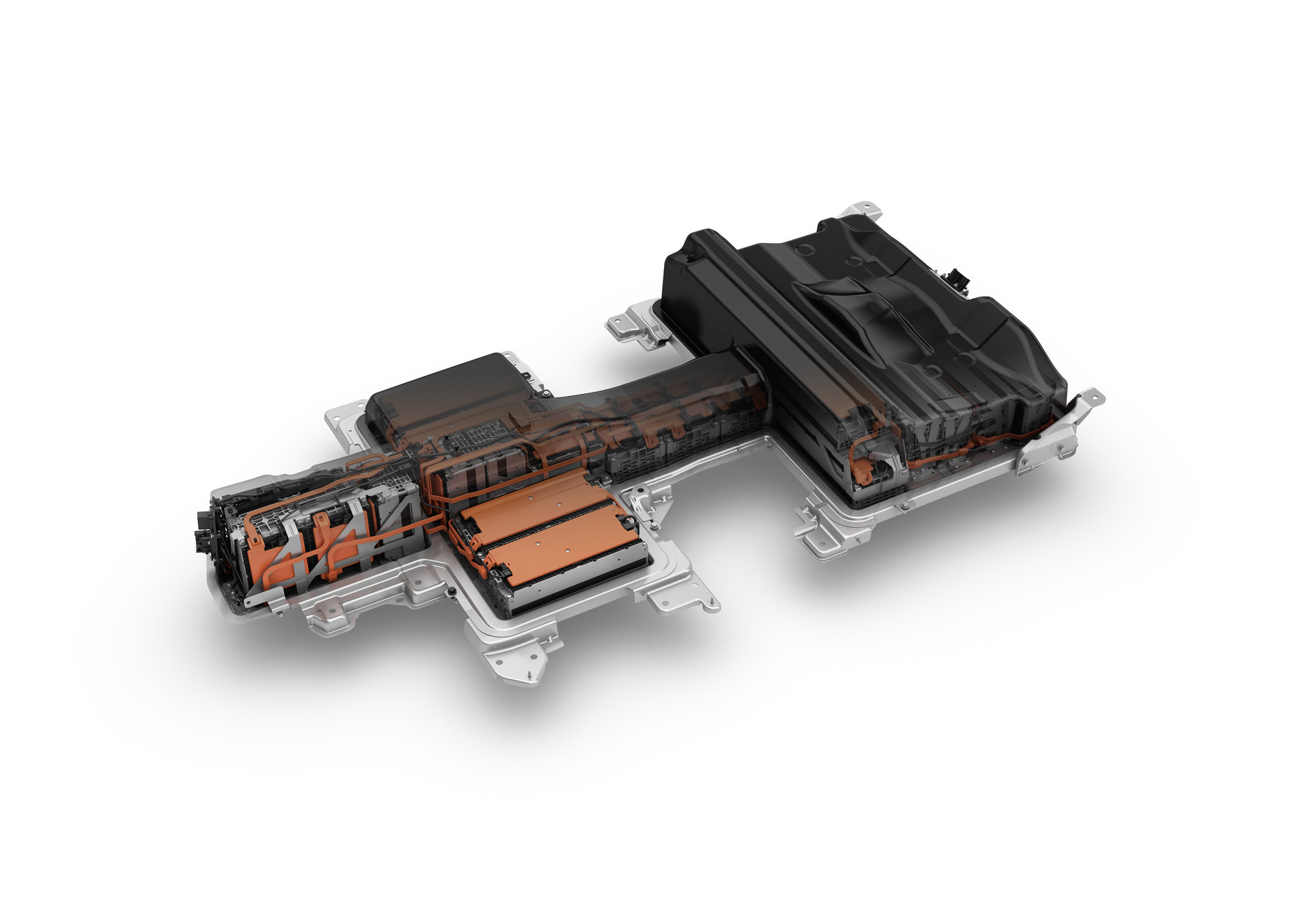
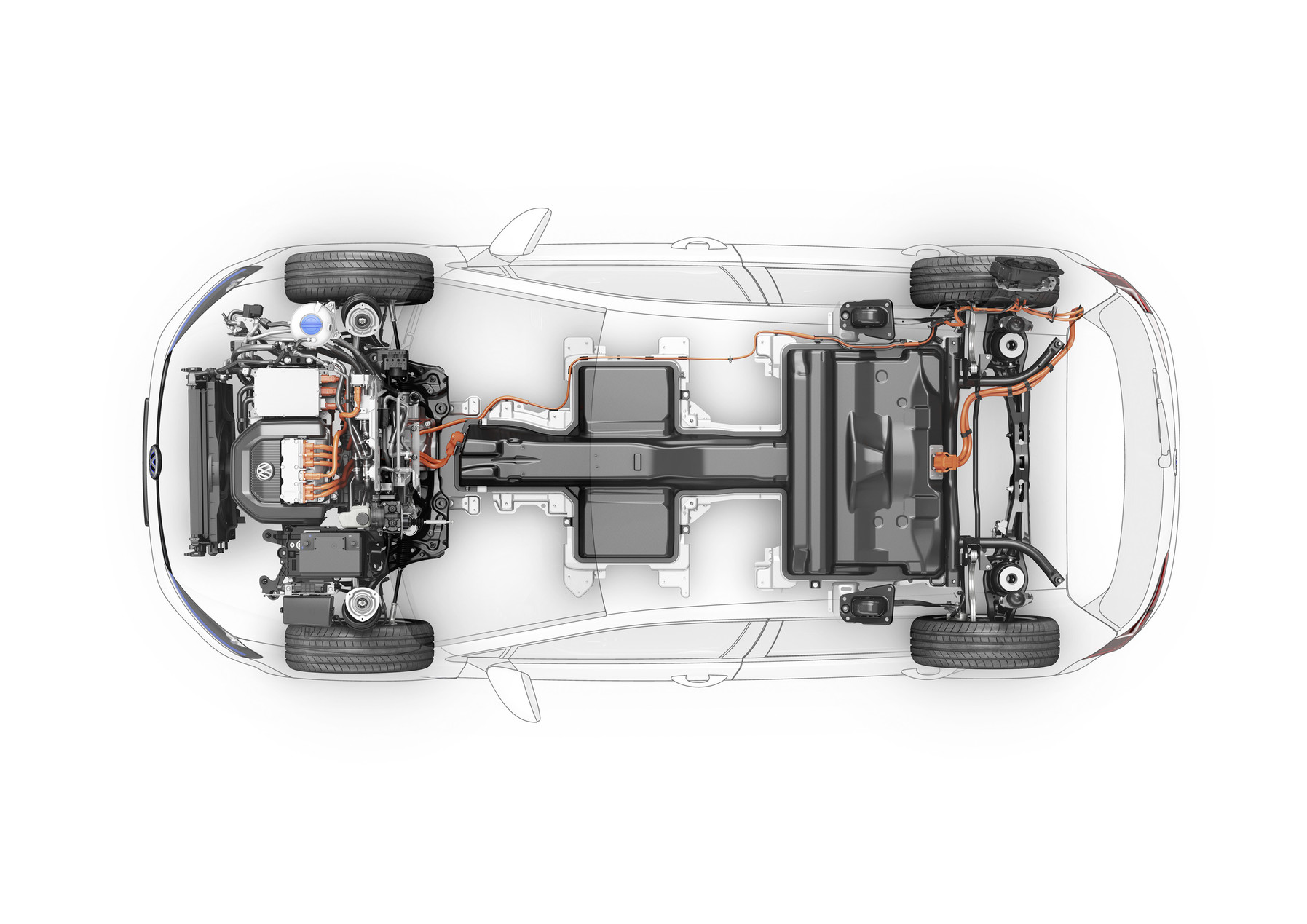
Meanwhile the Born, built from the ground up as an EV, comes with either a ~58 kWh battery (like my model) or a ~77 kWh battery.
The typical summer range for the e-Golf is ~140 miles, versus ~230 miles in my Born. There’s a small consolation though, if the consumption figures in the MFD in the e-Golf are to be believed: it can easily achieve over 5 miles/kWh, a figure that the Born rarely matches.
When it comes to EV range, an honest appraisal of one’s driving habits is essential. In our household, we almost never drive more than 100 miles in a day, which makes the e-Golf’s (lack of) range irrelevant for daily life.
For longer trips and driving holidays, the Born is far better suited. Whilst we have completed some long journeys in the e-Golf, the frequent charging adds significant travel time.
Winner: Born
Ride quality and handling
The e-Golf’s ride is generally good, with deep tyre sidewalls and pliant suspension acting to float the extra kerb weight over most road surfaces. My only complaint here is that coming to a sharp stop can elicit a fore-aft rocking motion.
The Born’s ride is firmer (without being harsh), and it carries its weight with confidence. Acceleration, cornering and braking are all handled gracefully.
Winner: Born
Aesthetics and ergonomics
As one of several variants of the Golf Mk 7.5, the e-Golf largely blends in with the crowd. The standard diamond-cut Astana wheels, and the C-shaped LED running lights (reserved for electric/hybrid Golfs), are the most noticeable differences.
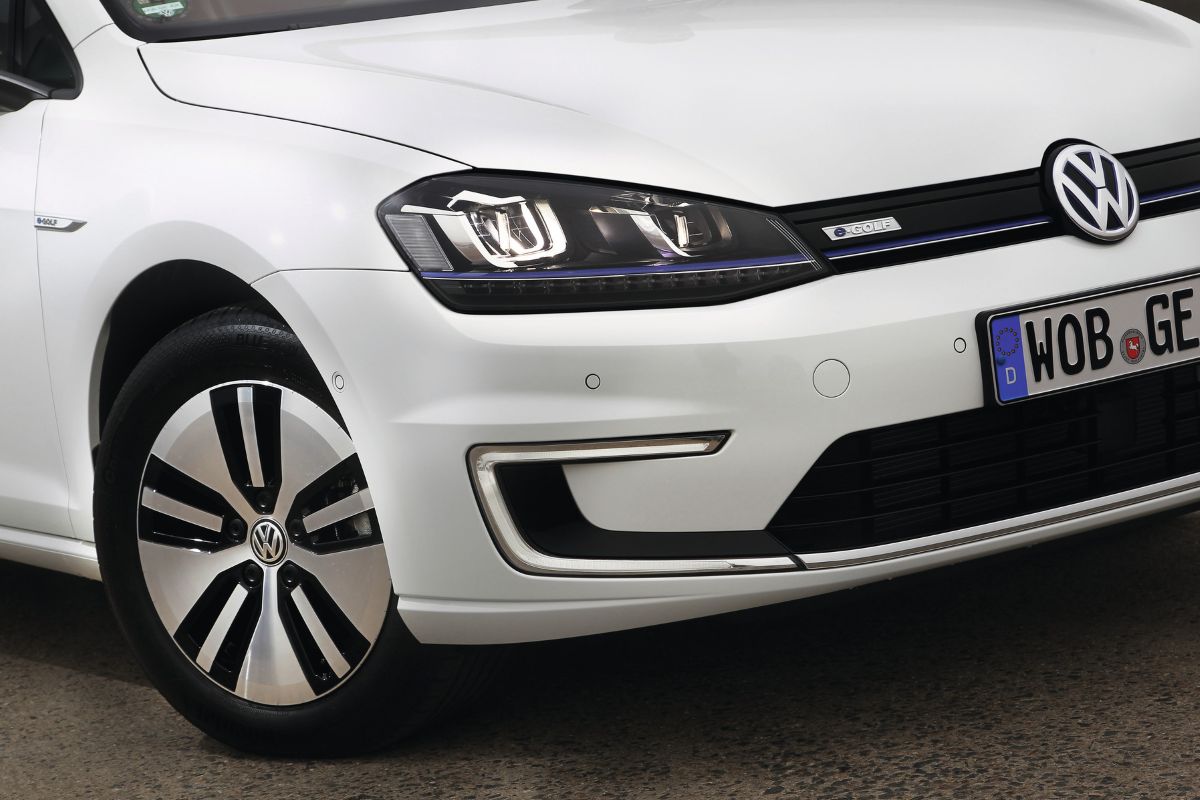
Tinted windows, which would give it a sportier look, are absent unless you find the rare Executive Edition trim level.
Inside the cabin, the e-Golf benefits from decades of ergonomic refinement. Everything is comfortable, thoughtfully positioned, and well made. The interior controls use mechanical buttons throughout, and there are physically rotating knobs for the climate control.
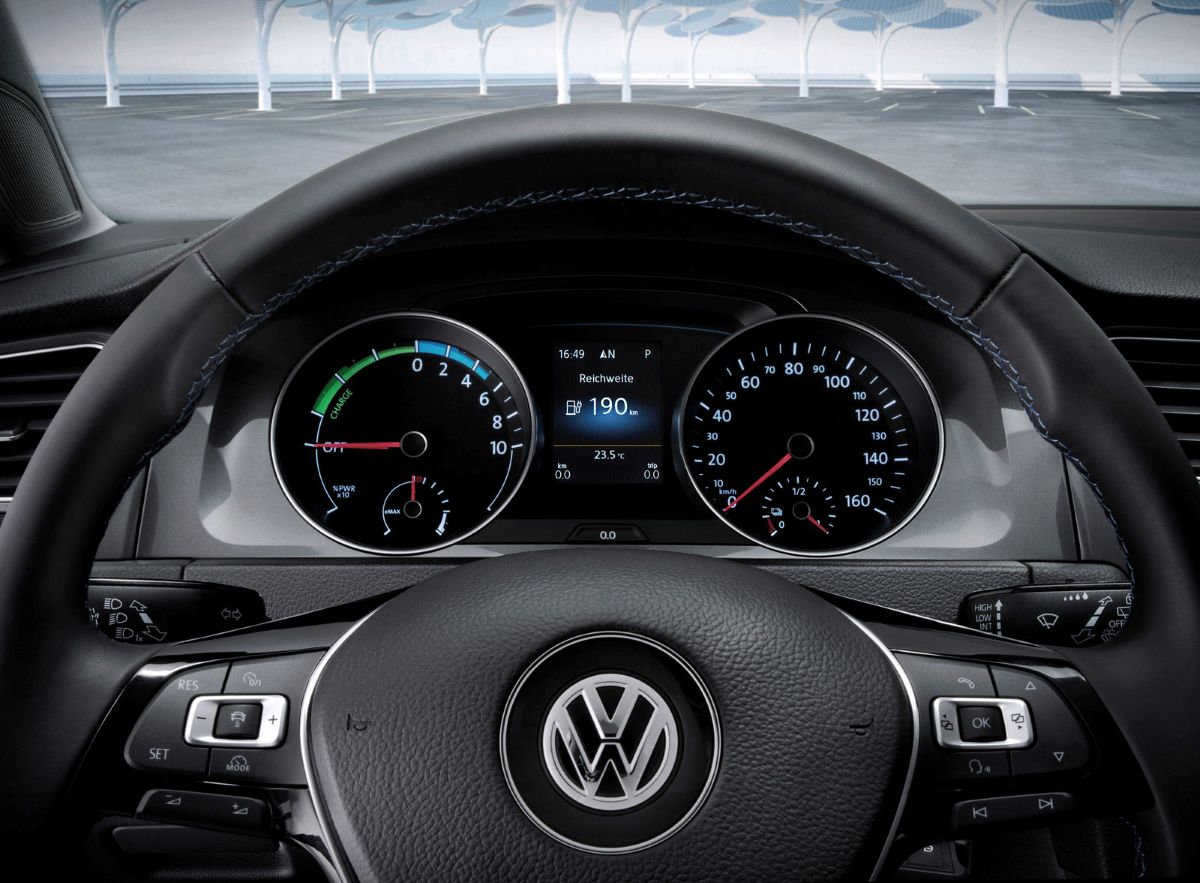
Some more examples of VW’s aftermarket-conversion-style approach to this car are the gear knob, which is an adapted version of the knob from a DSG gearbox; and the traditional ignition barrel, where you must insert the key and turn it to the starter motor position to activate the EV drivetrain.
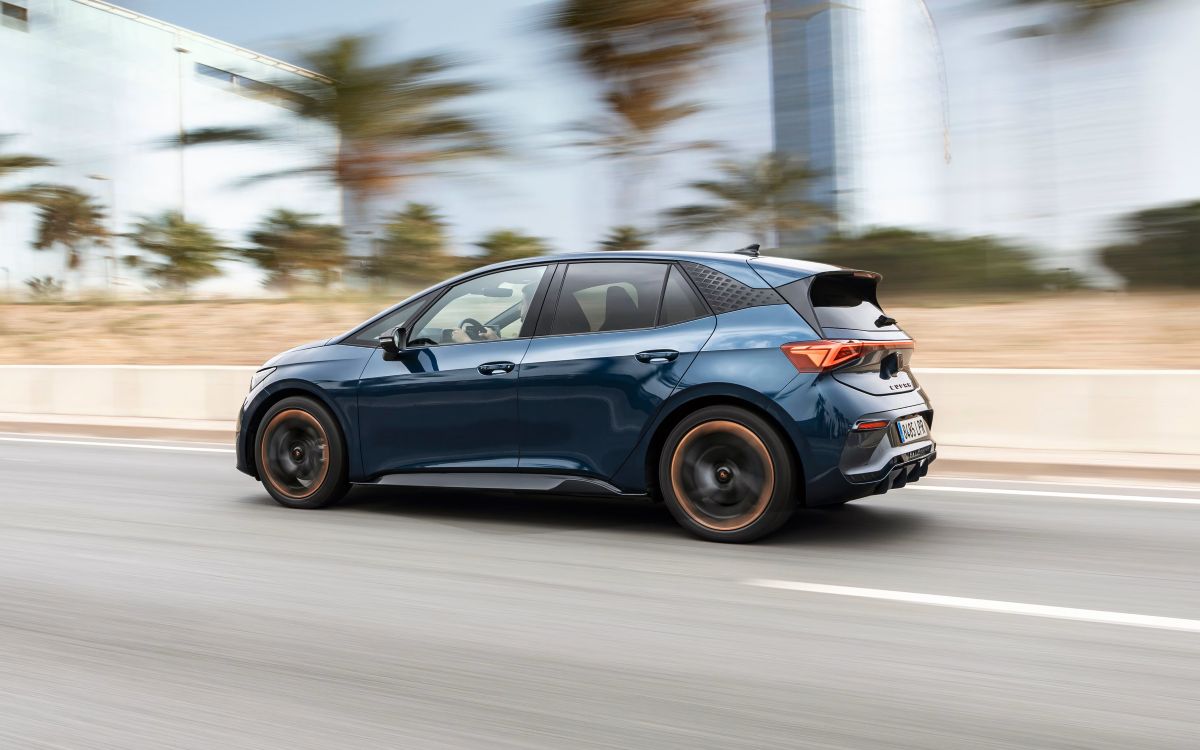
By contrast, the Born has a striking and complex exterior design, taking the VW ID.3 (on which it’s based) and layering on the best elements of the CUPRA visual identity. Looks are of course subjective, but I think it’s one of the nicest looking EVs on the road.
Unfortunately, once you get inside the Born, things go downhill. There are still some attractive styling elements, but they are rendered in hard plastic and cheap-looking fabric.
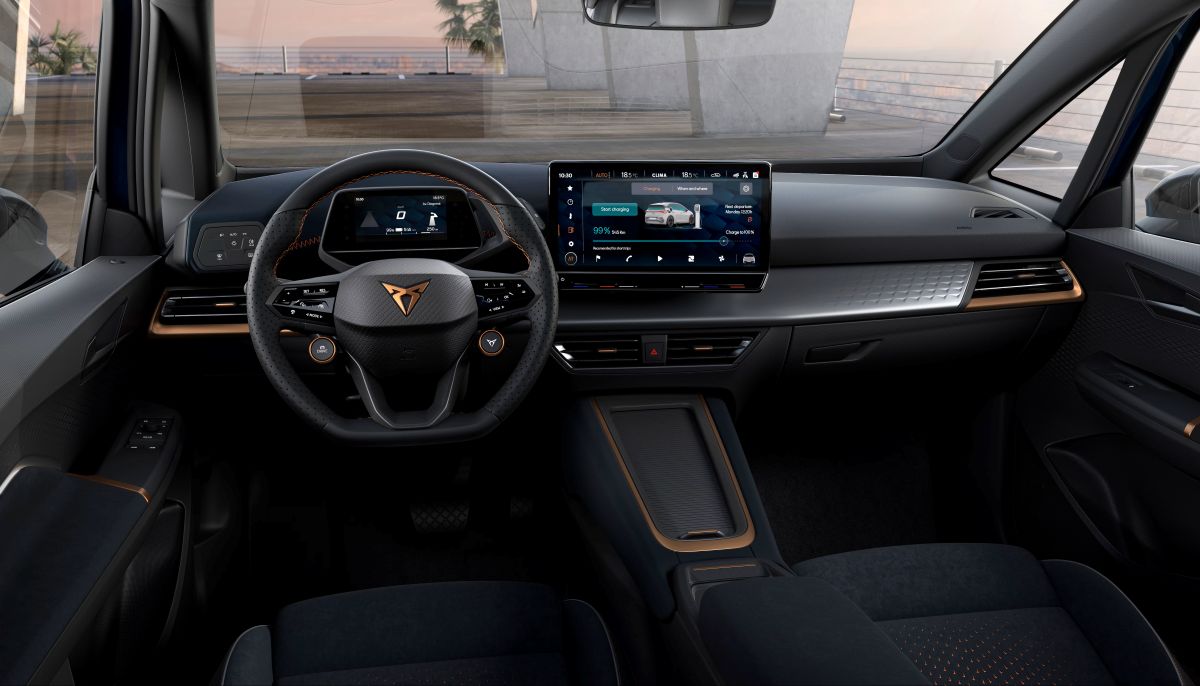
VAG cut costs everywhere they could with this interior, stripping out: rear speakers, discrete driver controls for the rear windows, soft touch plastics, mechanical buttons, climate control backlighting, rear door fabrics, even a solid “dead pedal” is replaced with thin plastic over carpet.
And it’s not just the Born that suffers from these issues, there’s been widespread criticism of interior build quality across all of VAG’s EV models.
Winner: Born for exterior, e-Golf for interior
Technology and connectivity
For basic driver assistance and convenience technology, the e-Golf doesn’t fare too badly. My e-Golf has active cruise control (standard), reversing camera (optional extra), heated seats (part of the optional winter pack), a larger infotainment display (optional extra) and Apple CarPlay (standard).
The LED lights must be manually dipped, and there is no lane assist (on my model).
In the Born, the same set of features are present, with the addition of a heated steering wheel, heads-up display, lane assist and auto dipping lights. Both lane assist and the auto dipping lights are frustratingly ineffective, and cannot be permanently disabled.
Other features, like 360° parking cameras and traffic assist (which steers for you), can be added via option packs.
The infotainment in the Born is slow, although not unusable, whereas the infotainment in the e-Golf looks dated but makes up for it by being more responsive. In both cases, I spend almost all my time with Apple CarPlay on the display.
It’s unclear to me whether VW’s Car-Net service still works with the e-Golf in the UK; the vehicle modem only supports 2G/3G connections, and most 3G networks in the UK have been shut down. The Born, with its 4G modem, will be supported for a lot longer.
My initial set-up of the My CUPRA app required a three-day visit to a dealership (under warranty) to resolve whatever software issue was stopping it from connecting. This is by no means common, although from what I’ve seen online it also wasn’t a unique issue.
Now that it’s up and running, it’s reliable, and I can use the Cupra WeConnect integration to connect the car to Home Assistant.
Remote climate control is by far the biggest perk, and it was the main reason I paid my first subscription fee for CUPRA CONNECT this year. (Each vehicle only comes with three years of free usage.)
Winner: Born
Conclusion
With some reluctance, I would say that the Born is the better car overall. The modern EV chassis and drivetrain, larger battery, and more advanced technology make it the future-proof choice.
But the high-quality interior of the e-Golf, and the adorably quirky way in which VW ripped out the internal combustion engine, and squeezed in an electric drivetrain, has its own appeal. If your daily mileage stays below 100 miles, and you have another car for longer journeys, the e-Golf remains a great option.